
How to stop procrastinating
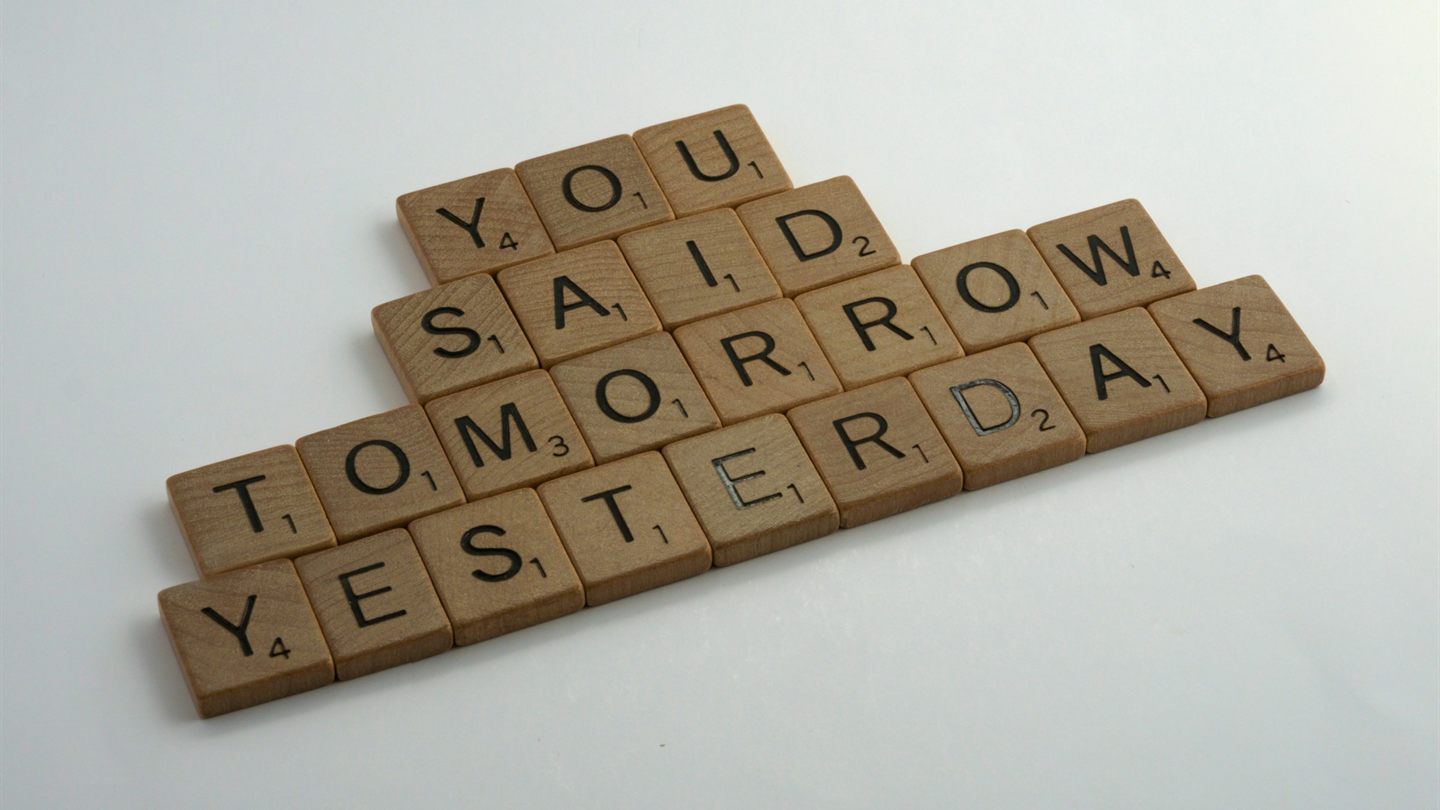
Procrastinating isn't the same as being lazy. Here's what happens in the moment you decide "later", and which methods hold up when researchers test them.
It's ten to midnight. The report that was due Monday is open in another tab, and your hand is reaching for your phone for the fifth time. This morning, the day looked long.
If that sounds familiar, you have plenty of company. According to a review by psychologist Piers Steel, 80 to 95% of college students procrastinate, and around one adult in five does it chronically. The good news: procrastination runs on a fairly clear mechanism, which means there are levers you can pull.
Procrastination isn't laziness
Laziness is not wanting to do anything. When you procrastinate, you do want to do the thing, just not right now. And while it waits, you somehow find time to wash the dishes, clear your inbox and read about black holes.
Procrastination researchers Fuschia Sirois and Tim Pychyl describe it as a quick mood fix. The task stirs up something unpleasant: boredom, anxiety, the fog of not knowing where to start. Putting it off makes that feeling go away right now. The bill goes to tomorrow, and in the moment of choosing, tomorrow doesn't quite feel like your problem.
Steel pulled together a large body of research and named the most reliable predictors that a task will get put off. There are four: how unpleasant the task is, how far away the payoff is, how confident you are that you can do it, and how easily you get distracted. So the question of how to stop procrastinating comes down to four levers, and every method below pushes on one of them.
9 ways to stop procrastinating
1. Name what exactly feels bad
The paper doesn't get put off because it's "hard". It gets put off because you don't know where to start, you're afraid it'll turn out badly, or it's just boring. Those are three different problems, and they have different fixes. Unclear calls for a tiny first step (method 2). Scary calls for permission to write a bad first draft. Boring calls for some company (method 6).
One honest sentence is enough: "I'm putting this off because..." The ending is often a surprise.
2. Make the first step ridiculously small
"Write the chapter" isn't a step. It's a project. A step is "open the doc and type the heading". "Get in shape" is a project too. The step is "put my running shoes by the door".
The point of a first step isn't progress. It's starting, because keeping something going is far easier than starting from zero. David Allen, who created Getting Things Done, has a related two-minute rule: if something takes less than two minutes, do it now instead of writing it down.
3. Decide in advance: "if... then..."
"I'll work on the report tomorrow" is too vague to work. "Tomorrow after lunch, I sit down at my desk and spend the first ten minutes outlining the report" is much closer to an actual agreement with yourself.
Plans like this are called implementation intentions. In a meta-analysis by Peter Gollwitzer and Paschal Sheeran covering 94 tests and more than 8,000 people, they had a sizable effect on whether people followed through. It works because the decision gets made earlier, while you have the energy, and in the moment all that's left is following your own instructions.
4. Get temptations out of sight
Impulsiveness is one of the strongest predictors of procrastination, and fighting it with willpower is exhausting. It's much easier to arrange things so the temptation is further away than the task.
Put your phone in another room, not face down on the desk. Log out of social media in your browser so getting back in takes ten extra seconds. Work in a full-screen window. Each of these is minor on its own, but together they make getting distracted slightly more expensive than keeping going.
5. Work in 25-minute blocks
Francesco Cirillo came up with the Pomodoro Technique in the late 1980s: 25 minutes of work, a 5-minute break, and a longer break after four rounds. There isn't much rigorous research on the method itself, but the mechanism is easy to see. Twenty-five minutes is manageable. Saying yes to one more block is a lot easier than saying yes to a whole evening of thesis.
6. Pair the unpleasant with the enjoyable
Economist Katy Milkman calls this temptation bundling: your favorite podcast only on the treadmill, the good coffee only while you clear your inbox. In her original study, people who could only listen to their audiobooks at the gym initially went 51% more often, though the effect faded after the holidays. A later field experiment with nearly 7,000 people found a smaller boost of 10 to 14%, but one that held. That's the realistic number: not a miracle, just real help.
7. Put a price on your promise
We cover this one in depth in our piece on commitment devices, so briefly here. When skipping a task costs you something, "later" gets a price tag at the exact moment you're deciding, not someday. Smokers who were offered a contract where their savings would go to charity if they didn't quit were more likely to quit than those who weren't, and the effect was still there a year later.
That's the idea behind StarDo: you can back any task with a promise in Telegram Stars. Finish on time and you pay nothing. Miss the deadline and you pay what you promised.
8. Make your progress visible
A meta-analysis of 138 experiments found that people who track their progress are more likely to reach their goals, and the effect is strongest when progress is written down or shared with others. There's a reason crossing things off feels so good.
In StarDo, that's what the sky is for: every promise you keep lights up a star. After a month you can see exactly how much you've finished, which makes "I never get anything done" a hard story to keep telling.
9. Forgive yourself for yesterday
It sounds soft, but it may be the most surprising item here. Students who forgave themselves for procrastinating before their first exam procrastinated less before the next one. The explanation is simple: guilt is exactly the kind of unpleasant feeling we want to escape, and procrastination is where we usually escape to.
So beating yourself up doesn't help. Something calmer does: "That didn't work yesterday. What will I do differently today?"
Procrastinating on studying or at work
Before an exam, methods 2, 3 and 5 work best: split preparation into topics, decide in advance when and where you'll start the first one, and study in blocks. If you're avoiding it because you're afraid you won't get through everything, start with the shortest topic. Finishing one takes some of the pressure off.
At work, the tasks that slip are usually the ones without a clear finish line: "sort out the reporting", "think about strategy". Rewrite them so it's obvious what done looks like: "draft three options and send them to Sam". From there, methods 3, 4 and 7 do the heavy lifting.
When it isn't really procrastination
Sometimes "I can't get started" isn't about habits. If you haven't been able to get going on anything for weeks, have lost interest even in things you love, or your sleep or appetite has changed, it could be burnout or depression. If trouble starting and finishing things has followed you your whole life, along with distractibility, it may be worth looking into ADHD. In those cases, the tips here aren't treatment, and the best first step is talking to a doctor or therapist.
Frequently asked questions
Is procrastination a mental illness?
No. It's a habit of putting things off, and almost everyone has it to some degree. It can show up alongside conditions that are worth treating, though, as described above.
How do I stop procrastinating right now?
Pick the one task you've been avoiding the longest. Shrink the first step to two minutes, put your phone in another room, and set a 25-minute timer. The goal isn't to finish. It's to start.
Why do I put off even the things I want to do?
Because the things we want are often the ones that matter most, which also makes them the scariest: what if it doesn't work out? Giving yourself permission to do it badly the first time helps. You can fix a bad draft. You can't fix a blank page.
You don't need all nine methods at once. Pick one for the task that's been hanging around the longest, and try it this week.
Free, inside Telegram, nothing to install.